
 1 / 8
 2 / 8
 3 / 8
 4 / 8
 5 / 8
 6 / 8
 7 / 8
 8 / 8
Modern Root Cellar for Vegetable Preservation in Cold Arid Regions: A Case Study of Ladakh, India
Published on:
Project Overview
1. Executive Summary & Research Team
This report evaluates an underground modern root cellar engineered for high-altitude cold arid regions. Conducted between December 2024 and March 27, 2025, at the University of Ladakh, Kargil Campus (34.3985° N, 75.9974° E; 3,500 m elevation), the project addresses severe winter post-harvest losses and nutritional deficits across Ladakh [1], [4].
| Role | Investigator | Department & Institution |
|---|---|---|
| Project Investigator | Dr. Mohd Raza | Assistant Professor, Dept. of Biochemistry, Govt. Degree College Kargil |
| Co-Project Investigator | Dr. Mohd Shabir | Faculty, Department of Botany, University of Ladakh |
| Co-Project Investigator | Khadim Hussain Majaz | Research Scholar, RDIK & NKD College, Sant Gadge Baba Amravati University, Maharashtra |
In Ladakh, winter ambient temperatures drop between −10°C and −30°C (with study-site winter means of −5°C to −25°C) [7], restricting local vegetable cultivation to 4–5 months annually [2]. Traditional underground pits (Sadong/Bangba) lack precise thermal and humidity regulation, resulting in 30–40% post-harvest losses [3] and contributing to winter vegetable shortages in 78% of households [4], [5]. Concurrently, harsh winter conditions hinder local mushroom farming [6].
- Quantitative Evaluation: Compare storage efficiency and moisture retention between modern underground cellar storage and conventional outside storage.
- Dual-Use Viability: Validate simultaneous long-term root vegetable preservation and controlled Oyster mushroom cultivation.
- Passive High-Altitude Design: Minimize energy consumption using geothermal soil insulation, controlled ventilation, UV-C sterilization, and digital telemetry.
3. System Architecture & Experimental Methodology
| System Component | Technical Specification |
|---|---|
| Structural Dimensions | 6.7 m × 6.7 m × 6.1 m (L × W × H) underground chamber buried beneath 0.6 m of insulating soil cover. |
| Thermal & Moisture Barrier | Waterproofed concrete walls and flooring engineered to prevent frost penetration and maintain near-saturation humidity. |
| Ventilation System | 4 sq. ft. ventilation pit hole fitted with adjustable dampers for passive airflow and temperature modulation. |
| UV-C Sterilization | UV-C lamps mounted at entry points and storage shelves with reflective interior surfaces, running automated 15–30 min/day cycles to suppress mold, bacteria, and pathogens without manual intervention. |
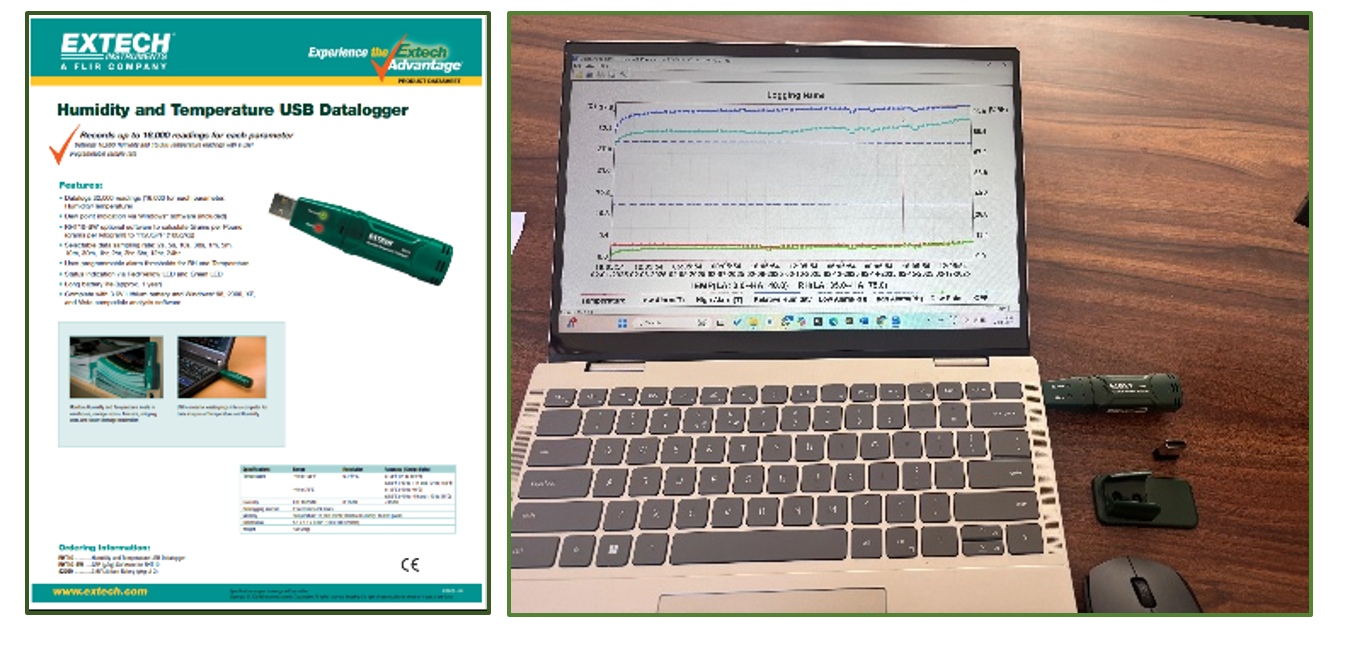
| Digital Telemetry | Extech RHT10 Humidity and Temperature USB Datalogger recording daily temperature (°C), relative humidity (%), dew point (°C), and GPP values. |
| Test Crops (10 kg each) | Potato (Solanum tuberosum), Carrot (Daucus carota), Turnip (Brassica rapa), Beetroot (Beta vulgaris), and Gold Ball Turnip (Brassica rapa subsp. rapa). |
4. Experimental Results & Environmental Stability
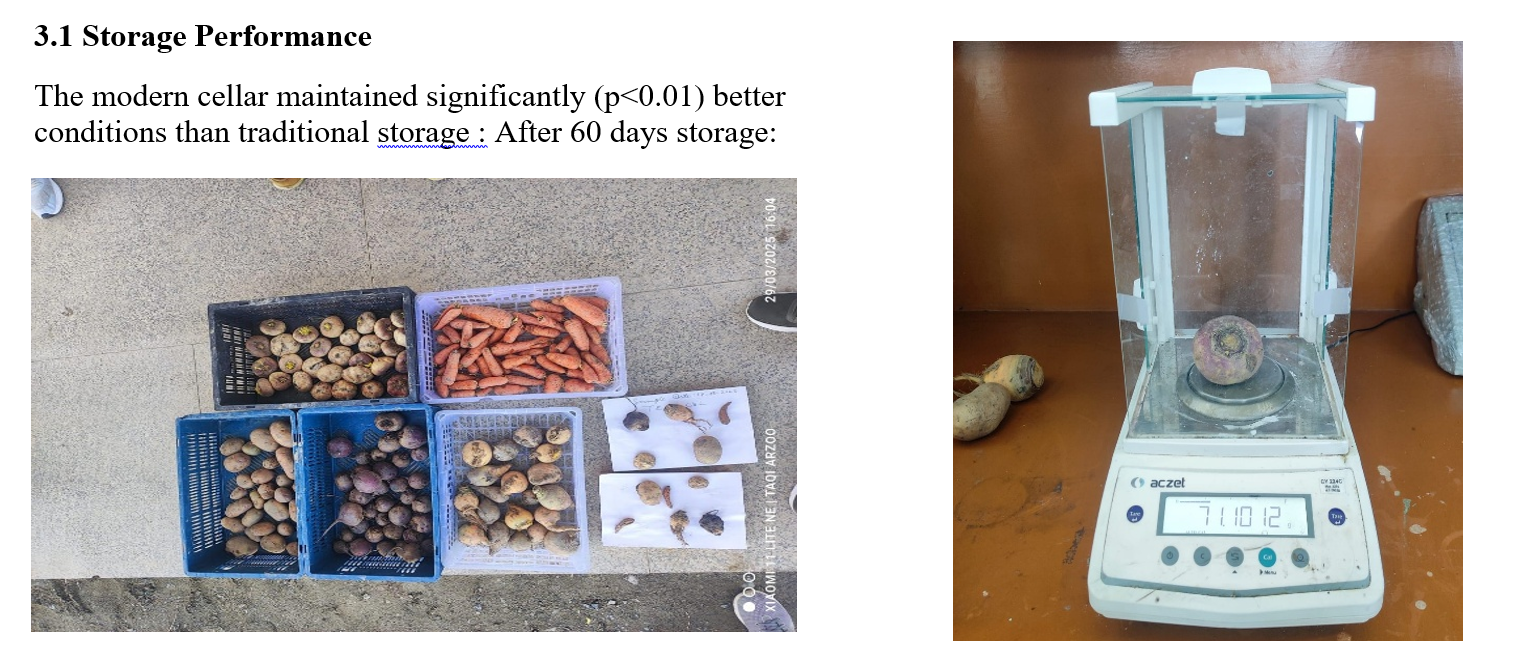
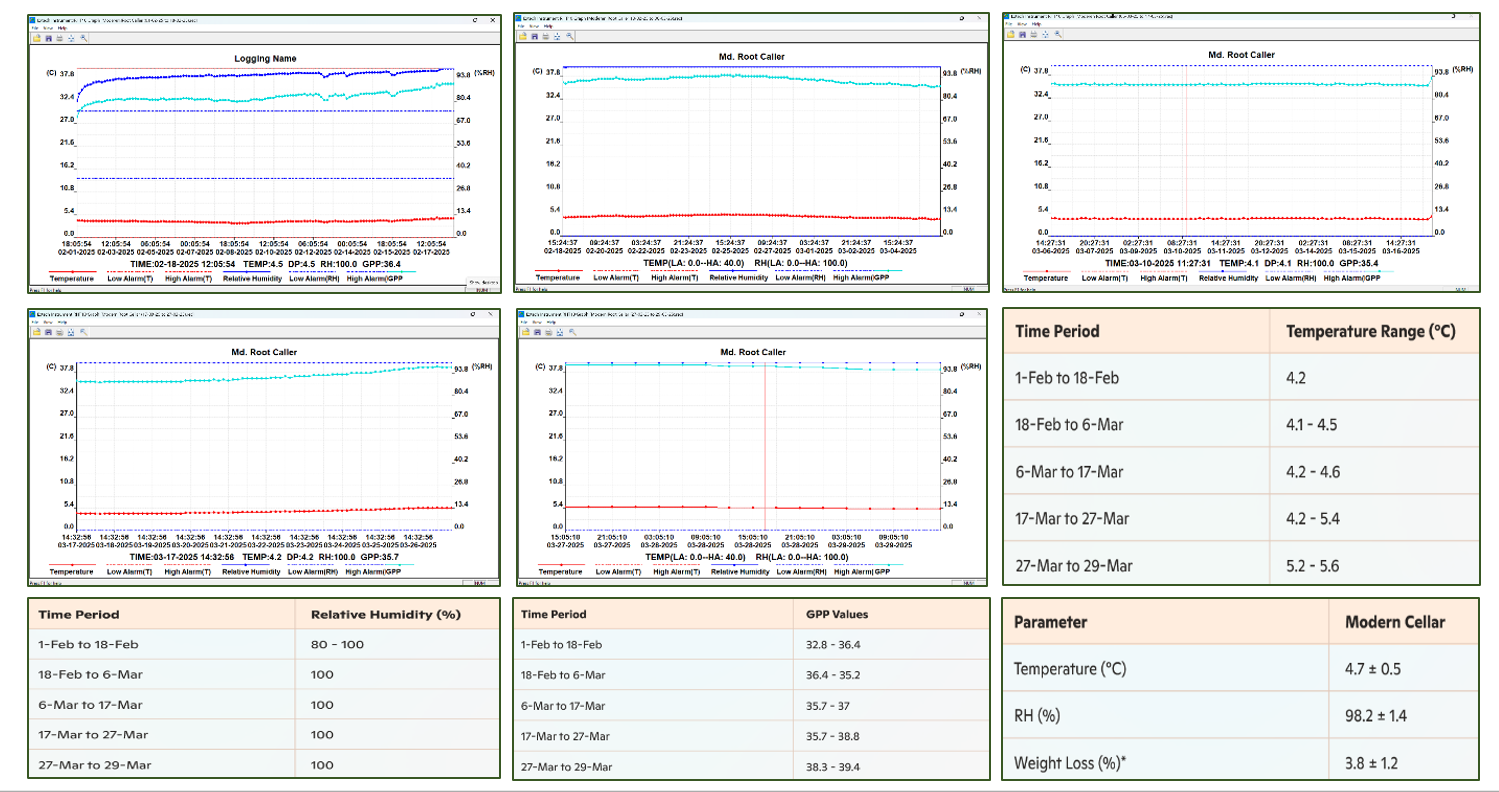
Across the 60-day evaluation period (February–March 2025), the modern root cellar maintained a highly stable microclimate significantly superior (p < 0.01) to external ambient conditions, achieving a mean temperature of 4.7 ± 0.5°C, mean relative humidity of 98.2 ± 1.4%, and overall produce weight loss of only 3.8 ± 1.2% (<5%).
| Monitoring Period | Temperature Range (°C) | Relative Humidity (%) | GPP Values |
|---|---|---|---|
| 1-Feb to 18-Feb-2025 | 4.2 | 80–100 | 32.8–36.4 |
| 18-Feb to 6-Mar-2025 | 4.1–4.5 | 100 | 36.4–35.2 |
| 6-Mar to 17-Mar-2025 | 4.2–4.6 | 100 | 35.2–35.7 |
| 17-Mar to 27-Mar-2025 | 4.2–5.4 | 100 | 35.7–36.8 |
| 27-Mar to 29-Mar-2025 | 5.2–5.6 | 100 | 38.3–39.4 |
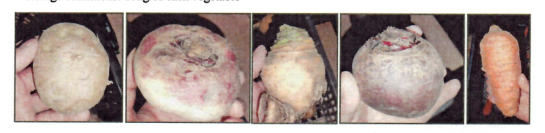
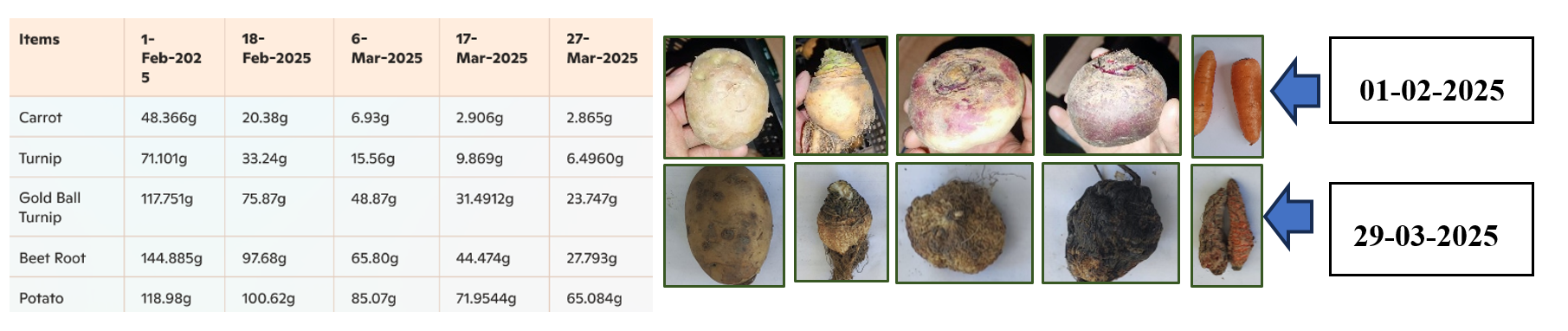
In contrast, control samples stored outside the root cellar experienced severe, exponential dehydration and mass reduction between February 1 and March 27, 2025:
| Vegetable Item | 1-Feb-2025 | 18-Feb-2025 | 6-Mar-2025 | 17-Mar-2025 | 27-Mar-2025 |
|---|---|---|---|---|---|
| Carrot | 48.366 g | 20.38 g | 6.93 g | 2.906 g | 2.865 g |
| Turnip | 71.101 g | 33.24 g | 15.56 g | 9.869 g | 6.4960 g |
| Gold Ball Turnip | 117.751 g | 75.87 g | 48.87 g | 31.4912 g | 23.747 g |
| Beetroot | 144.885 g | 97.68 g | 65.80 g | 44.474 g | 27.793 g |
| Potato | 118.98 g | 100.62 g | 85.07 g | 71.9544 g | 65.084 g |
5. Discussion, Limitations & Future Advancements
While the prototype successfully stabilizes temperature (4–5°C) and humidity (~100% RH) to preserve nutritional quality and generate secondary income via Oyster mushroom cultivation, high initial construction cost remains the primary barrier to widespread farmer adoption. Planned technological upgrades include:
- Automated Climate & Gas Mitigation: Real-time multi-gas sensors (ethylene, CO2, methane) paired with AI-triggered exhaust scrubbers and ozone/UV-PCO ethylene neutralizers.
- AI Spoilage & Pest Detection: Night-vision and hyperspectral imaging to detect sub-visual mold/bacterial growth, ultrasonic pest deterrents triggered by motion AI, and blockchain batch logging.
- Renewable Energy Integration: Solar-assisted power systems to ensure off-grid sustainability across remote Himalayan communities.