
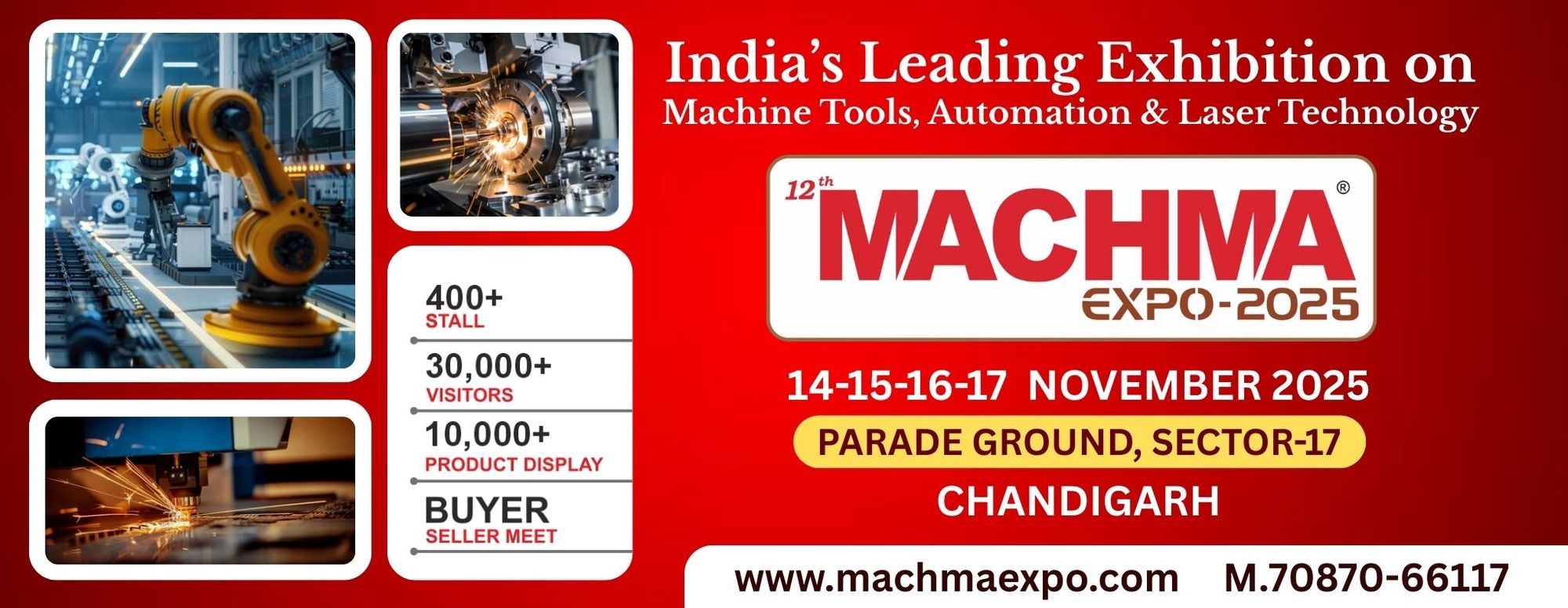
TEC UoL Members attended MACHMA 2025, TEC Panjab University
Published on:
Event Overview
Objectives of the Visit
- ✓ To study the latest technological innovations showcased by industry & research institutions.
- ✓ To explore collaboration opportunities with technology providers and innovators.
- ✓ To understand emerging trends in manufacturing, automation & industrial solutions.
- ✓ To observe the exposure provided to innovators & researchers in terms of skill development & industry interface.
Event Highlights
- ✓ Exhibitions: Over 40 industry partners and technology developers showcased prototypes, industrial machinery, and automation systems.
- ✓ Workshops and Demonstrations: Hands-on sessions were conducted on 3D printing, robotics, AI-driven manufacturing, CNC operations, and advanced materials.
- ✓ Technical Sessions: Expert talks delivered by professionals from CSIR labs, MSME sector, IITs, DRDO, and leading companies.
- ✓ Startup Pavilion: Early-stage startups from PU & external institutes presented solutions related to agriculture, biomedical devices, smart manufacturing, and renewable energy.
- ✓ Industry-Academia Interaction: Networking sessions and B2B/B2R (Business-to-Research) meetings facilitated potential collaborations.
Director’s & Industry Meet
A special interactive meeting was held between the Directors/ senior university representatives & industry delegates. The session focused on strengthening long-term partnerships, identifying commercialization pathways for university technologies & discussing collaborative funding possibilities. The Director emphasized the crucial role of MACHMA as a bridge between academic research & industrial application while highlighting TEC-Panjab University’s readiness to support co-development initiatives.
Industry–Academia Pain Points Discussion
A session was conducted to identify & address gaps between academia and industry needs. Key pain points discussed included:
- ✓ Limited awareness of industrial-scale challenges among academic researchers.
- ✓ Difficulty in translating lab-level prototypes into market-ready products.
- ✓ Constraints in funding and mentorship for early-stage innovations.
- ✓ Need for faster and more transparent technology transfer processes.
- ✓ Skill gaps in students with respect to real-world industrial requirements.
Industry experts recommended aligning research outcomes with market demand, while academic representatives emphasized the need for collaborative R&D support, access to industrial facilities, and sustained engagement beyond the event. The session ended with mutual agreement on establishing structured frameworks for communication, joint projects, and industrial internships for students.
Key Observations
- ✓ Strong participation from MSME & manufacturing sectors indicated a growing interest in academic–industrial linkages.
- ✓ The event successfully highlighted indigenous technologies aligned with Atmanirbhar Bharat.
- ✓ TEC played an active role in bridging the gap between lab-scale innovations & commercialization.
- ✓ Industry representatives expressed interest in technology transfer and joint development.
Outcomes
- ✓ Identification of potential collaborators for R&D and consultancy projects.
- ✓ Awareness among academia & industries regarding industrial requirements & technology commercialization pathways.
- ✓ Possible future partnership discussions between academia TEC & external organizations initiated.
- ✓ Knowledge gained on current trends such as smart manufacturing, IoT-based industrial systems & sustainable materials.